
Feeds:
Posts
Comments

Jesus Wrong?

“Verily I say unto you, That there be some of them that stand here, which shall not taste of death, till they have seen the kingdom of God come with power.” — Jesus (Mark 9:1)

Some point to this verse to say Jesus expected his return to be in the lifetime of his followers. The reasoning goes, then, that since he was wrong about that, maybe he was wrong about other things, too.

What is wrong is thinking he’s talking about his second coming, taking his statements out of context with the events that followed.

About his second coming Jesus actually told his disciples

“The days will come, when ye shall desire to see one of the days of the Son of man, and ye shall not see it.” (Luke 17:22)

So who saw the Kingdom of God come with power? The answer is in the very next verse where Jesus takes Peter, James, and John for prayer and his appearance changes. They see him in his glory and it gives them such a shock they don’t know what to say!

That “Coming of the Kingdom of God with power” was also seen the day of Pentecost where the Holy Spirit filled the disciples hearts and they were awestruck!

And the “Coming of the Kingdom of God with power” is seen, today, where men or women, young or old, decide to let Jesus be their boss — holding nothing back.

“But as many as received him, to them gave he power to become the sons of God, even to them that believe on his name” (John 1:12)

“But ye shall receive power, after that the Holy Ghost is come upon you: and ye shall be witnesses unto me…” (Acts 1:8)

“He that believeth on me, as the scripture hath said, out of his belly shall flow rivers of living water. But this spake he of the Spirit, which they that believe on him should receive:” (John 7:38)

I don’t think Jesus was wrong, he knew exactly what he was talking about.

— fritz
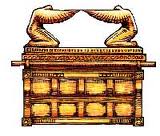
Ancient religious relics so long ago — why do we need to know how they were made, where they were placed, how they were used? Because they weren’t just for an ancient people but for today. They were recorded, Paul says,
“…for our admonition, upon whom the ends of the world are come (1st Corinthian 10:11)

The Old Testament Tabernacle, relates to the body of a believer in Christ.1 The Ark of the Covenant, the believer’s heart — not the blood pump but the core of being!

Notice the Ark’s composition — Wood overlayed with pure gold.2
Wood speaks of humanity, gold speaks of deity.

When we give ourselves to Christ he come into our very being and covers us with himself. We are said to have “put on Christ”.3 Our frail humanity is overlayed with Christ.

Over our renewed self God places his angels to cover us with wings of protection.4 It is there, at the core of our being covered by Christ, God himself speaks5.

How do we know these things? When Christ died the temple veil preventing access to the Holy-of-Hollies was torn open — God did it (from above, top to bottom)6 He invites us to enter and fellowship with him, to see what he has done.

The invitation stands

[N]either knoweth any man the Father, save the Son, and he to whomsoever the Son will reveal him. Come unto me, all ye that labour and are heavy laden, and I will give you rest. — Matthew 11:27b-28

— fritz

1 – See Ancient Object Lessons – Part One (February 11, 2012)
2 – Exodus 25:10-11
3 – Galatians 3:27
4 – Exodus 25:18-20, Psalm 91:4
5 – Exodus 25:22, Romans 8:16
6 – Matthew 27:51

The Russian author, Leo Tolstoy, describes his life’s journey this way…

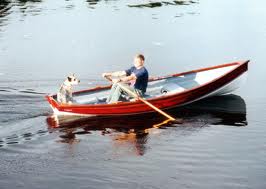
What happened to me was something like this: I was put into a boat (I do not remember when) and pushed off from an unknown shore, shown the direction of the opposite shore, had oars put into my unpractised hands, and was left alone. I rowed as best I could and moved forward; but the further I advanced towards the middle of the stream the more rapid grew the current bearing me away from my goal and the more frequently did I encounter others, like myself, borne away by the stream.

There were a few rowers who continued to row, there were others who had abandoned their oars; there were large boats and immense vessels full of people. Some struggled against the current, others yielded to it. And the further I went the more, seeing the progress down the current of all those who were adrift, I forgot the direction given me.

In the very centre of the stream, amid the crowd of boats and vessels which were being borne down stream, I quite lost my direction and abandoned my oars. Around me on all sides, with mirth and rejoicing, people with sails and oars were borne down the stream, assuring me and each other that no other direction was possible. And I believed them and floated with them.

And I was carried far; so far that I heard the roar of the rapids in which I must be shattered, and I saw boats shattered in them. And I recollected myself. I was long unable to understand what had happened to me. I saw before me nothing but destruction, towards which I was rushing and which I feared. I saw no safety anywhere and did not know what to do; but, looking back, I perceived innumerable boats which unceasingly and strenuously pushed across the stream, and I remembered about the shore, the oars, and the direction, and began to pull back upwards against the stream and towards the shore.

That shore was God; that direction was tradition; the oars were the freedom given me to pull for the shore and unite with God. And so the force of life was renewed in me and I again began to live.”

Tolstoy, Leo (2008-04-24). A Confession (mobi) (Kindle Locations 767-768). MobileReference. Kindle Edition.