Feeds:
Posts
Comments

The Russian author, Leo Tolstoy, describes his life’s journey this way…

What happened to me was something like this: I was put into a boat (I do not remember when) and pushed off from an unknown shore, shown the direction of the opposite shore, had oars put into my unpractised hands, and was left alone. I rowed as best I could and moved forward; but the further I advanced towards the middle of the stream the more rapid grew the current bearing me away from my goal and the more frequently did I encounter others, like myself, borne away by the stream.

There were a few rowers who continued to row, there were others who had abandoned their oars; there were large boats and immense vessels full of people. Some struggled against the current, others yielded to it. And the further I went the more, seeing the progress down the current of all those who were adrift, I forgot the direction given me.

In the very centre of the stream, amid the crowd of boats and vessels which were being borne down stream, I quite lost my direction and abandoned my oars. Around me on all sides, with mirth and rejoicing, people with sails and oars were borne down the stream, assuring me and each other that no other direction was possible. And I believed them and floated with them.

And I was carried far; so far that I heard the roar of the rapids in which I must be shattered, and I saw boats shattered in them. And I recollected myself. I was long unable to understand what had happened to me. I saw before me nothing but destruction, towards which I was rushing and which I feared. I saw no safety anywhere and did not know what to do; but, looking back, I perceived innumerable boats which unceasingly and strenuously pushed across the stream, and I remembered about the shore, the oars, and the direction, and began to pull back upwards against the stream and towards the shore.

That shore was God; that direction was tradition; the oars were the freedom given me to pull for the shore and unite with God. And so the force of life was renewed in me and I again began to live.”

Tolstoy, Leo (2008-04-24). A Confession (mobi) (Kindle Locations 767-768). MobileReference. Kindle Edition.

“Someone was telling me this week that nobody can make a violin speak the last depths of human longing until that soul has been made tender by some great anguish. I do not say it is the only way to the heart of God, but I must witness that it has opened an inner shrine for me which I never entered before.”

— March 15, 1930
Frank Charles Laubach (September 2, 1884 – June 11, 1970) Evangelical Christian missionary to the Philippines, founder of the “Each One Teach One” literacy program used to teach about 60 million people to read in their own language, and the only American missionary honored by a US Postage Stamp.

Letters by a Modern Mystic (p. 18). Purposeful Design Publications. Kindle Edition.

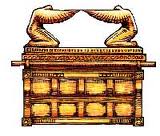
I recently caught a glimpse of the symbolical meaning of the famous Ark of the Covenant which God commanded Moses to build. It was Israel’s greatest treasure, the place where they knew God resided.

It wasn’t intended as just a religious shrine but an object lesson of God’s presence in the life of those in Christ.

The Bible says the tabernacle, altar, and priesthood were all really

“only a hint of what goes on in the true sanctuary of heaven, which Moses caught a glimpse of as he was about to set up the tent-shrine. It was then that God said, “Be careful to do it exactly as you saw it on the Mountain.” – Hebrews 8:5b (Message Bible)

Moses saw the real sanctuary in heaven and the way God designed every human being — both are the true sanctuary. When a person gives his/her life to Christ, his/her body becomes the temple of God on earth:

“You realize, don’t you, that you are the temple of God, and God himself is present in you?” – 1st Corinthians 3:16

While the meanings of all these are not spelled out, we can learn from them.

So what are some of these object lessons? The tabernacle, itself, for one.

Comprised of three parts (Outer Court where anyone could visit; Inner Court for only the priests, and the Holy-Of-Hollies separated by a vail and only available once a year for the high priest alone) the Tabernacle is comparable to how God made every person; Body, Soul, and Spirit — the body where we interact with everyone; our inner soul where our mind, will, and emotions work; the human spirit where the subconscious rules (that mysterious inner place even we don’t fully understand).

It was in that inner sanctum, the Holy-of-Hollies, where the ark of the covenant was housed. That’s where God’s Spirit goes when a man or woman asks Jesus to come into their “heart” and be their savior.

“He that believeth on me, as the scripture hath said, out of his belly shall flow rivers of living water. But this spake he of the Spirit, which they that believe on him should receive” — John 7:38-39a

— fritz