
Feeds:
Posts
Comments

Posts Tagged ‘Galatians 3’

“He that dwelleth in the secret place of the most High shall abide under the shadow of the Almighty.” — Psalm 91:1

The Bible says God has a secret place.

Is this just a euphemism for God’s general care or is there, really, a place (physical or spiritual) not even suspected by most?  Is it just a euphemism for heaven or can the living person enter?

Psalms 31:20 calls it a “Pavilion” or “tent” saying it is a place of God’s presence, a place of safety from pride and strife of tongues. Job calls it a place of wisdom and that it is “hid from the eyes of all living” (Job 28:21) so at this point it sounds a bit like heaven, but not so fast! The New Testament, using the term “mystery”, says it is now revealed!

Paul said he discovered it and we could, too!

“By revelation [God] made known unto me the mystery; as I wrote afore in few words,  whereby, when ye read ye may understand…)”– Ephesians 3:2-4

He wrote the secret mystery is that God always planned to join himself with mere human beings — and actually does so in Christ! This mystery, he said, is “Christ in you” (Colossians 1:27) and that we actually enter into Christ like we enter our clothing (Galatians 3:27).

More than a euphemism, the Bible says our bodies actually become a physical part of Christ and that what we do in our bodies, both good and bad, is being done with and to Christ’s body. (1st Corinthians 6:13-17) This is why we need to do right things with our bodies. That same passage says those joined to Christ are one spirit, the human spirit infused and one with God’s Holy Spirit.

God’s secret place, his pavilion? Safe in Christ!

“God raised us up and seated us in the heavens with Christ Jesus … to show future generations the greatness of his grace by the goodness that God has shown us in Christ Jesus.” — Ephesians 2:5-7 (CEB)

Start reading the Scriptures from this perspective and a whole new world opens!

– fritz
Related Post: “Thin Places” — March 20, 2012
Read Full Post »

The ancient religious artifacts of the Old Testament are actually object lessons for us, today.

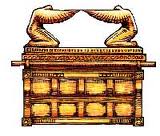
The Tabernacle with its three sections is symbolic of the human body, soul, and spirit. The Ark of the Covenant symbolical of the believer’s “heart” — covered with Christ, sheltered under angelic protection, the place where we hear God’s voice.

The items inside the Ark of the Covenant are symbolical, too. A copy of the ten commandments was put there representing the law of God written in our hearts.

There was a second item inside the Ark of the Covenant – Aaron’s rod.

There’s a little history behind this artifact. Moses’ and Aaron’s authority was challenged so all the tribal leaders were commanded to put their walking sticks in God’s tent. God promised to reveal his choice. The very next day Aaron’s rod had not only grown leaves and flowers but yielded ripe almonds.

With the placement of Aaron’s rod inside the Ark of the Covenant Israel was reminded of God’s choice for High Priest and we are reminded of his chosen priesthood is inside of us. Like the ancient priests

  • We are not just tolerated but chosen;
  • God is our inheritance
  • God’s kingdom is our home
  • worship is our job.

“But ye are a chosen generation, a royal priesthood, a holy nation, a peculiar people; that ye should shew forth the praises of him who hath called you out of darkness into his marvellous light” — 1st Peter 2:9

We do this, not by all becoming a pastor (though some may serve that way), but by serving Jesus in everything we do.

“And whatsoever ye do, do it heartily, as to the Lord, and not unto men — Colossians 3:23

— fritz

1 – Hebrews 9:4, Exodus 25:10-20, Numbers 17:10

Read Full Post »

Ancient religious artifacts of the Old Testament are actually object lessons for us, today.

The Tabernacle is symbolical of the human body, soul, and spirit. The Ark of the Covenant symbolical of the believer’s “heart” — covered with Christ, sheltered under angelic protection, the place where we hear God’s voice.

The items inside the Ark of the Covenant are symbolical, too. A copy of the Law was put there representing the God’s law written in our hearts,  Aaron’s rod was placed inside symbolical of us being personally chosen by God for his service.

There was something else there, too — a jar of Manna.

The Israelites quickly ran out of food on their trek to the Promised Land so God sent what they called, “Manna”, meaning “What is it?”.   An important fact about Manna was its shelf life — one day.   Whatever wasn’t eaten that day went rancid with two exceptions — the manna gathered on Friday remained good through the Sabbath and the manna Moses put inside the Ark of the Covenant never went bad.

Jesus said his body was the true “Manna” from heaven. He said his followers would eat his flesh and drink his blood — well, that caused quite a stir!   They had a hard time with metaphors. That manna inside the Ark could represent Jesus in our hearts (we are all free to draw our own conclusions) but I think it primarily symbolizes God’s sustaining power through difficulties.

Anyone can make it through the easy stuff — but what about when life gets hard and lonely? Christ’s followers have some unique internal resources to sustain through trial and that sustaining presence of Jesus never goes rancid.

“Peace I leave with you,” Jesus said, “My peace I give unto you: not as the world giveth, give I unto you. Let not your heart be troubled, neither let it be afraid.” (John 14:27)

When the natural resources of those around us play out and we continue to press into God’s grace with peace, that’s when opportunities arise to point to Jesus.

Sanctify the Lord God in your hearts: and be ready always to give an answer to every man that asketh you a reason of the hope that is in you — 1st Peter 3:15

— fritz

1 – Hebrews 9:4, Exodus 25:10-20, Numbers 17:10

Read Full Post »

« Newer Posts - Older Posts »